
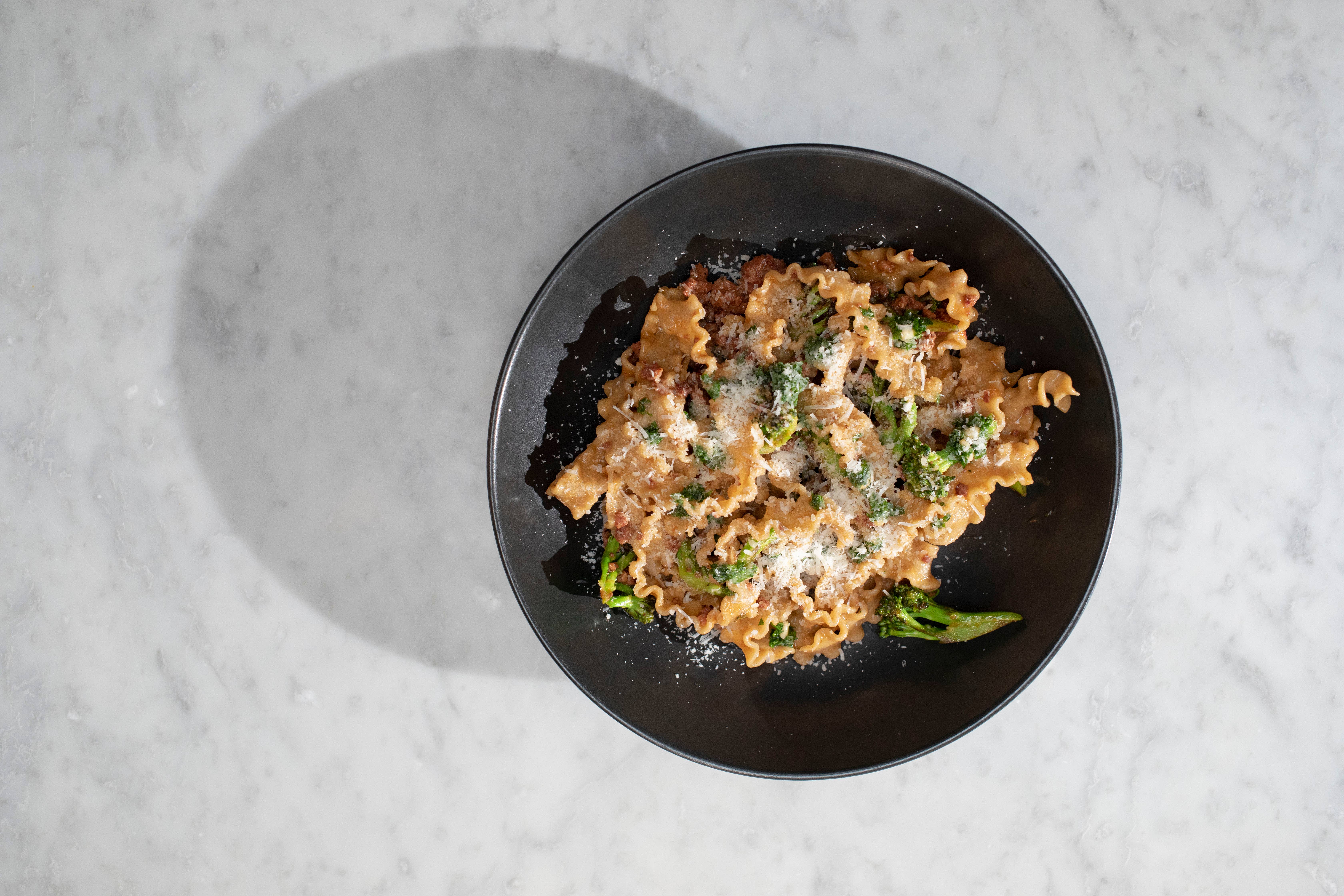
Rich and flavorful, yet surprisingly simple to make, this comforting pasta dish is one of Chef Gavin’s favorites to cook at home for his three boys.

TYPE MAIN COURSE
SERVES 6
DIFFICULTY EASY
PREP TIME 20 MINUTES
COOK TIME 2 TO 2 1/2 HOURS
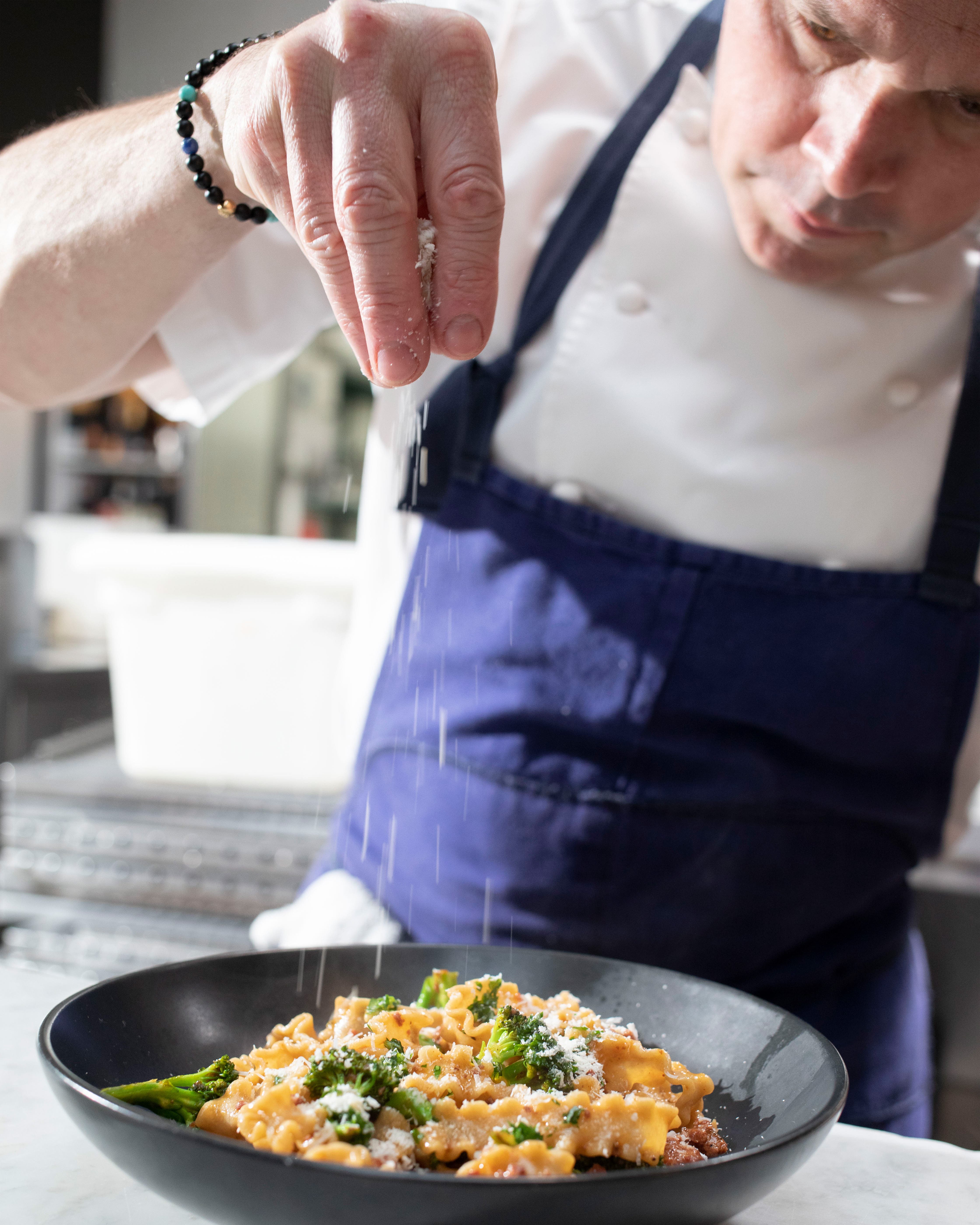
A chef in a white uniform sprinkles salt over a black bowl of creamy pasta with greens in a kitchen, conveying focus and culinary artistry.A chef in a white uniform sprinkles salt over a black bowl of creamy pasta with greens in a kitchen, conveying focus and culinary artistry.

Ingredients

  • 2 pounds ground pork
  • 1½ teaspoons fennel seeds, toasted and crushed
  • 1 teaspoon coriander seeds, toasted and crushed
  • 1 teaspoon red pepper flakes
  • 2 tablespoons minced parsley
  • 1½ plus 1 tablespoons fine sea salt, plus more to taste
  • 2 celery stalks, rough chopped
  • ½ small yellow onion, rough chopped
  • 2 garlic cloves, minced
  • ⅓ cup tomato paste
  • ½ cup white wine
  • 3 cups chicken stock, homemade or from a butcher shop
  • 4 tablespoons unsalted butter
  • 12 oz. fresh pappardelle or tagliatelle
  • 1 cup grated Parmesan cheese


Directions

  1. In a bowl, combine the ground meat, toasted seeds, pepper flakes, parsley, and 1½ tablespoons of salt. Be careful not to overmix: too much friction will cause the meat to bind together.
  2. Set the All-Clad 10-inch fry pan over medium-high heat. Add the pork mixture and cook, using a large spoon or spatula to break apart the meat into smaller and smaller pieces as it renders. It’s ready when it begins to brown and creates a fond on the bottom of the pan.
  3. Meanwhile, in a food processor, combine the celery, onion, and garlic. Process just until the mixture is finely minced.
  4. When the pork has begun to brown, add the minced vegetables and continue to cook for 2 to 3 minutes, stirring occasionally and scraping the bottom of the pan to release the fond. Once the fond has redeveloped, drain off any excess rendered fat. Add the tomato paste and stir to incorporate. Then add the wine and reduce for a minute or so.
  5. Add the stock and bring to a boil. Once boiling, reduce the heat to a simmer and cook until the sauce has thickened and the meat is very tender, 2 to 2½ hours. Season to taste with salt.
  6. When you’re ready to serve the pasta, bring 4 quarts of water to a boil in an All-Clad stainless steel 8 qt stock pot. Season with 1 tablespoon of the salt.
  7. Meanwhile, in the All-Clad 2-quart saucier, combine the ragu and butter and bring to a simmer.
  8. Drop the pasta noodles into the boiling water and cook according to instructions.
  9. Scoop the cooked pasta out of the boiling water into the sauce and stir to coat. Add ½ cup of the Parmesan and combine well to integrate, cooking for another 2 minutes as the noodles absorb the sauce and it starts to thicken.
  10. Serve the pasta with the remaining ½ cup Parmesan.

Pro Tip

This ragu can be made up to 3 days ahead and refrigerated until ready to use, or frozen for up to 3 months.


How to Make the Best Pork Ragu: Easy & Simple Tips for Deep Flavor

A great pork ragu is built slowly, allowing simple ingredients to develop deep, rich flavor over time. The key is layering—from properly browning the pork to simmering the sauce gently until the meat becomes tender and the sauce thickens into a silky, hearty texture.

A few techniques can make a big difference:

  • Brown the pork well to build flavor and create fond at the bottom of the pan
  • Cook the tomato paste until slightly caramelized for a richer, deeper sauce
  • Simmer low and slow so the pork becomes tender without drying out
  • Use pasta water and cheese at the end to help the sauce cling beautifully to the noodles

Because pork ragu relies on patience rather than complicated steps, it’s the kind of recipe that feels elevated while still being approachable enough for everyday cooking. The result is a comforting pasta sauce with layers of flavor that become even better as it cooks.


What is The Best Pasta for Pork Ragu? Pappardelle, Rigatoni & More

The best pasta for pork ragu is one that can hold up to the sauce’s rich texture and capture pieces of the slow-simmered meat in every bite. Because pork ragu is hearty and deeply flavorful, sturdier pasta shapes tend to work best.

Pappardelle is one of the most classic choices. Its wide ribbons pair beautifully with thick meat sauces, allowing the ragu to coat the noodles evenly while creating a balanced bite. Tagliatelle offers a similar experience with a slightly narrower shape, making both excellent options for traditional-style pork ragu pasta.

For a different texture, shorter pasta shapes also work well:

  • Rigatoni for catching sauce inside the tubes
  • Paccheri for a larger, more substantial bite
  • Penne for an easy everyday option that still holds sauce well

No matter the shape, cooking the pasta to al dente is important so it can finish in the sauce without becoming too soft. Tossing the pasta directly with the ragu before serving helps the sauce cling more evenly and creates a more cohesive, restaurant-style result.


Why Ground Pork Creates a Rich and Balanced Ragu

Ground pork is an excellent choice for ragu because it creates a sauce that feels rich and flavorful without becoming too heavy. As it cooks slowly, the pork becomes tender and absorbs the aromatics, wine, stock, and tomato paste, helping develop a deeply savory sauce with layers of flavor.

Compared to larger cuts of meat, ground pork also breaks down more evenly throughout the sauce, creating a texture that coats pasta beautifully. Its natural balance of meat and fat helps give the ragu body and richness while still allowing ingredients like fennel, garlic, herbs, and Parmesan to stand out.

Because it cooks down into smaller pieces, ground pork also pairs especially well with broad noodles like pappardelle or sauce-catching shapes like rigatoni, making each bite feel balanced, hearty, and comforting.


The Right Cookware for Pork Ragu and Pasta Sauces

Recipes like pork ragu benefit from cookware that can handle every stage of the cooking process—from building a flavorful soffritto to gently simmering the sauce until it becomes rich and deeply developed. The right pan helps ingredients cook evenly while giving you the control needed for slow reductions and frequent stirring.

The All-Clad D3 Stainless Chef's Selection Sauciers are especially well-suited for this style of cooking. Available in 1-quart, 2-quart, and 3-quart sizes, each saucier features gently rounded sides that make it easy to stir, whisk, and scrape every bit of the sauce as it cooks. Whether you're preparing a smaller batch for a weeknight meal or a larger portion to serve a crowd, the curved interior promotes even reduction and helps create a smooth, well-integrated sauce.

Their bonded three-ply construction delivers fast, consistent heat, making them ideal for reducing stock, incorporating tomato paste, and finishing the ragu with butter, Parmesan, and reserved pasta water before tossing with your favorite pasta.

For recipes that begin with browning meat, pairing a saucier with a D3 Stainless fry pan or skillet is a practical combination. A fry pan provides ample surface area for developing a rich sear and flavorful fond, while the saucier takes over for the slower stages of simmering and finishing the sauce. Together, they create a versatile setup for everything from classic pork ragu to other pasta sauces, braises, and everyday recipes.

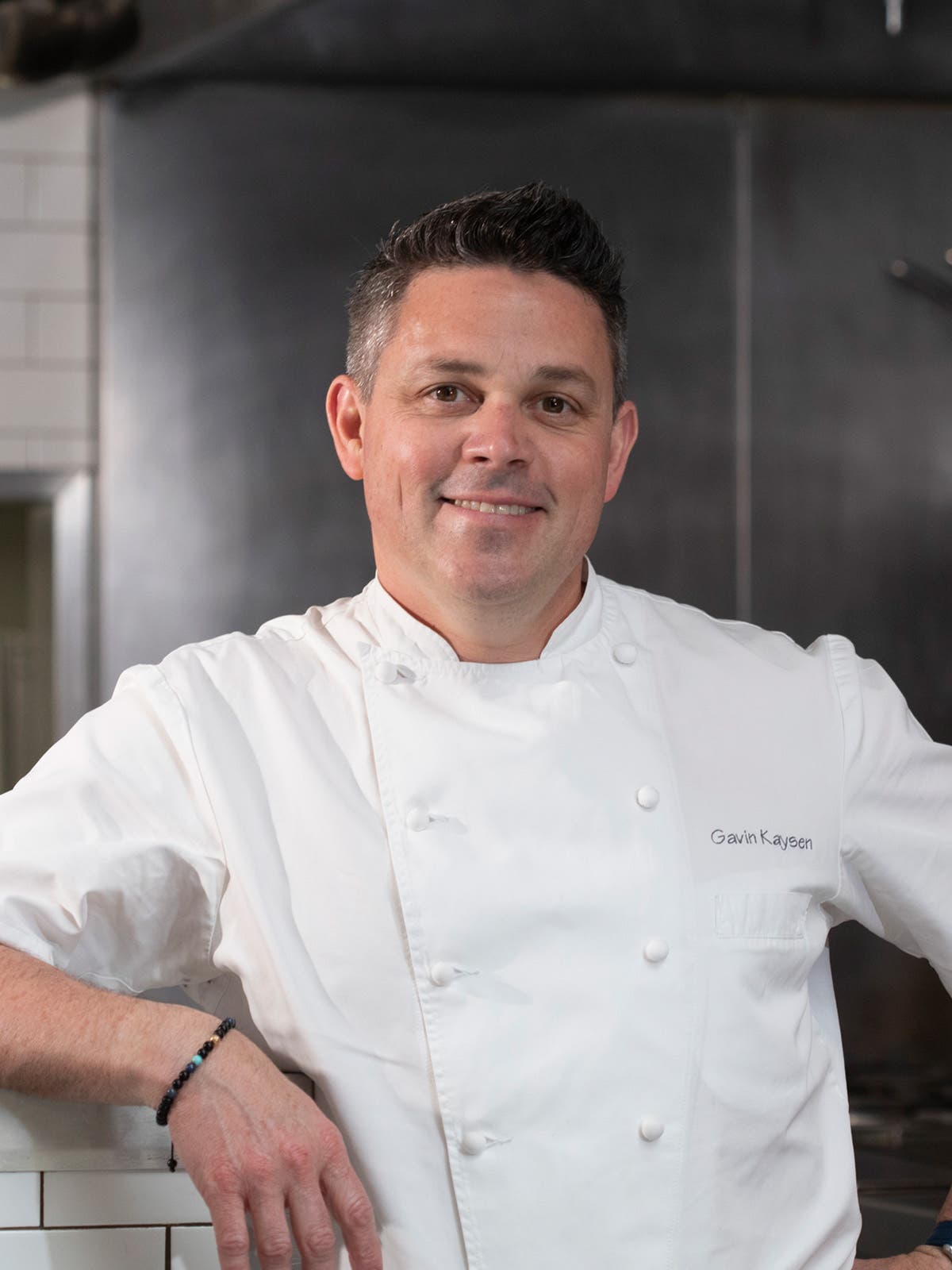
A chef in a white jacket leans casually against a counter in a professional kitchen. He smiles confidently, conveying a relaxed and welcoming tone.A chef in a white jacket leans casually against a counter in a professional kitchen. He smiles confidently, conveying a relaxed and welcoming tone.

RECIPE BY

Chef Gavin Kaysen


All-Clad’s Resident Chef Derek has been working with flavors and fragrance for his entire career. Finding a path from perfumery to food, Derek competed on numerous amateur cooking shows which led him to the All-Clad Test kitchen. Here he excels in creating new recipes, blogs, video demos, and food photography for our consumers.